The wind turbine bearing industry forms the mechanical backbone of modern wind energy generation, enabling smooth, low-friction rotation across critical turbine subsystems. Engineered to endure extreme dynamic loads, variable wind speeds, and harsh environmental conditions, these precision components support main shafts, gearboxes, generators, and pitch and yaw mechanisms. As global power grids accelerate their shift toward clean electricity, the industry plays an essential role in maximizing turbine reliability, operational lifespan, and overall energy yield.
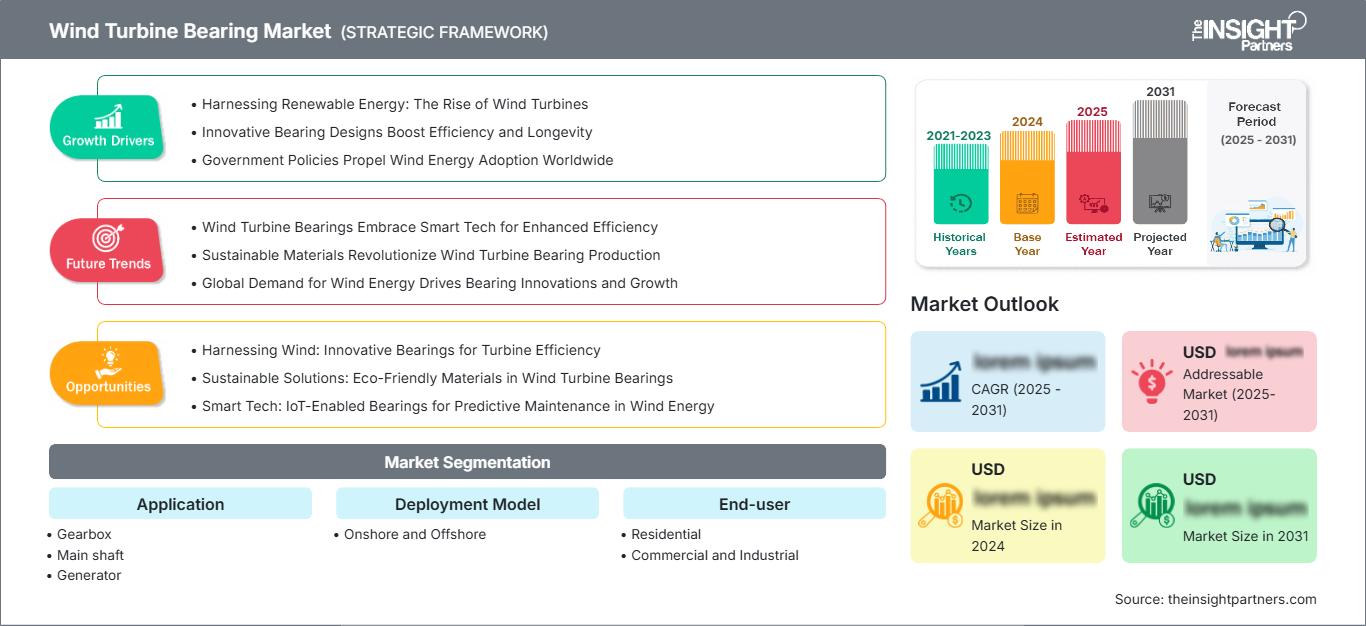
The global Wind Turbine Bearing Market size is projected to reach US$ 30.23 billion by 2034 from US$ 17.68 billion in 2025. The market is anticipated to register a CAGR of 6.14% during the forecast period 2026-2034.
Market Dynamics and Key Growth Drivers
The rapid expansion of global wind power capacity serves as the primary catalyst propelling demand for high-performance wind turbine bearings. Governments across North America, Europe, and Asia Pacific are enforcing ambitious decarbonization targets, offering tax credits, subsidies, and favorable regulatory frameworks to accelerate utility-scale wind farm installations. Simultaneously, turbine original equipment manufacturers are scaling up rotor diameters and power ratings particularly for offshore wind platforms exceeding 8 MW to lower the levelized cost of electricity. Larger rotors generate substantially higher axial, radial, and tilting moment loads, creating strong demand for heavy-duty slewing rings, spherical roller bearings, and tapered roller bearings capable of operating reliably over multi-decade service cycles.
Offshore wind deployment represents one of the most lucrative avenues of expansion. Because offshore maintenance involves specialized vessels, complex logistics, and high operational downtime costs, operators prioritize corrosion-resistant coatings, advanced sealing systems, and superior fatigue resistance. Additionally, ongoing repowering initiatives where aging onshore wind farms are upgraded with modern, higher-efficiency nacelles and drivetrains continue to generate steady replacement and aftermarket demand across established wind energy markets.
Get a PDF Sample– https://www.theinsightpartners.com/sample/TIPTE100001289
Technological Innovations and Segment Trends
Manufacturers are heavily investing in metallurgical advancements, surface engineering, and digital integration to overcome premature bearing wear and lubrication challenges. The adoption of hybrid ceramic rolling elements, specialized heat-treatment processes, and eco-friendly synthetic lubricants is helping extend maintenance intervals while reducing friction losses. Furthermore, the integration of embedded Internet of Things sensors and real-time vibration monitoring systems is transforming asset management. Smart bearings paired with predictive analytics and digital twin platforms allow wind farm operators to detect early signs of subsurface fatigue or misalignment, preventing catastrophic gearbox or main-shaft failures.
By application, main shaft and gearbox bearings command substantial revenue shares due to their high replacement complexity and critical load-bearing functions, while pitch and yaw bearings experience steady uptake alongside multi-megawatt turbine rollouts. Regionally, Asia Pacific leads global production and installation volume, underpinned by aggressive wind infrastructure investments in China and India, while Europe and North America maintain strong momentum through offshore wind expansions and grid modernization programs.
Key Market Players
Prominent companies operating in the global wind turbine bearing market include:
Leading market participants are focusing on capacity expansions, localized manufacturing hubs near major offshore wind corridors, and strategic partnerships with turbine OEMs to strengthen supply chain resilience and capture long-term service contracts.
Get Full Copy of This Report- https://www.theinsightpartners.com/buy/TIPTE100001289
Future Outlook
Looking ahead through 2034, the wind turbine bearing market is poised for sustained structural transformation as next-generation ultra-large offshore turbines and floating wind platforms transition from pilot phases to commercial scale. Supply chain localization, circular manufacturing practices utilizing low-carbon steel, and automated condition-based maintenance will increasingly define competitive differentiation. Companies that combine high-load mechanical durability with intelligent diagnostic capabilities will remain best positioned to capitalize on global clean energy investments and drive long-term profitability across both OEM and aftermarket channels.
Also Available in : Korean| German| Japanese| French| Chinese| Italian| Spanish
Related Reports-
Bearing Market Growth, Trends & Demand by 2034
About The Insight Partners
The Insight Partners is a leading market research and consulting firm delivering actionable insights through in-depth industry analysis and strategic intelligence. The firm supports clients across various industries in making informed decisions by providing comprehensive market forecasts, competitive assessments, and growth opportunities.
Contact Us:
If you have any queries about this report or if you would like further information, please contact us:
Contact Person: Ankit Mathur
E-mail: sales@theinsightpartners.com
Phone: +1-646-491-9876