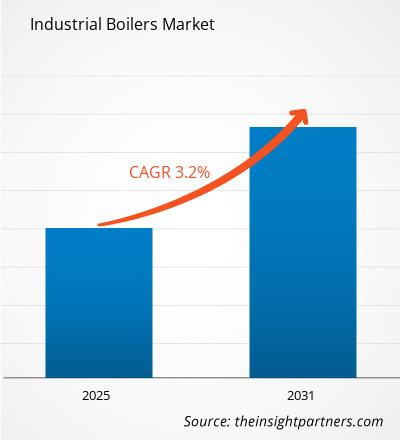
The global Industrial Boilers Market is entering a decade of steady expansion, fueled by accelerating industrial manufacturing output, stringent environmental emissions mandates, and a worldwide pivot toward energy-efficient thermal infrastructure. According to the latest industry analysis, the global Industrial Boilers Market size is expected to reach US$ 24.57 Billion by 2034 from US$ 16.88 Billion in 2025. The market is anticipated to register a CAGR of 4.26% during the forecast period 2026–2034.
Industrial boilers serve as the thermal backbone of modern heavy and light manufacturing, generating critical steam and hot water required for chemical processing, refining, food and beverage sterilization, pharmaceutical production, pulp and paper manufacturing, and captive power generation. As global supply chains expand and emerging economies build out large-scale industrial corridors, facility operators are increasingly prioritizing high-efficiency boiler systems that balance continuous thermal reliability with reduced fuel consumption and lower greenhouse gas emissions.
Key Market Drivers and Dynamics
A primary catalyst behind the market’s growth trajectory is the replacement of aging industrial thermal infrastructure. Across North America and Europe, thousands of legacy fossil-fuel boilers are reaching the end of their operational lifespans, prompting plant operators to invest in modern fire-tube and water-tube systems equipped with low-NOx burners and automated combustion controls. Regulatory frameworks such as the European Union’s Medium Combustion Plant Directive and updated ASME and environmental compliance standards are compelling manufacturers to upgrade legacy units to avoid penalties and meet corporate net-zero targets.
Get a PDF Sample– https://www.theinsightpartners.com/sample/TIPTE100000633
Simultaneously, rapid industrialization across the Asia-Pacific region is generating substantial greenfield demand. Expanding chemical complexes, textile hubs, and mega food-processing parks in countries such as India and China require high-capacity, continuous-duty steam generation equipment. While high upfront capital expenditures and complex retrofitting requirements remain operational hurdles for price-sensitive small and medium enterprises, long-term fuel savings and government incentives for clean industrial heating continue to outweigh initial installation costs.
Competitive Landscape and Key Players
The global industrial boilers landscape is characterized by intense technological competition, with established multinational engineering giants and regional powerhouses focusing on high-efficiency combustion, waste-heat recovery, and multi-fuel adaptability. Prominent companies shaping the global market include:
-
AMEC Foster Wheeler PLC
-
Siemens AG
-
Thermax Limited
-
Harbin Electric Corporation
-
Bharat Heavy Electricals Limited
-
General Electric Company
-
Dongfang Electric Corporation Ltd.
-
Babcock & Wilcox Enterprises, Inc.
-
IHI Corporation
-
AC Boilers S.P.A
Leading manufacturers are differentiating their portfolios through strategic partnerships, aftermarket maintenance services, and turnkey Engineering, Procurement, and Construction (EPC) capabilities. Rather than supplying standalone equipment, market leaders are increasingly delivering integrated plant-wide thermal solutions that combine high-pressure water-tube boilers with flue-gas desulfurization, carbon capture readiness, and digital monitoring suites.
Get Full Copy of This Report- https://www.theinsightpartners.com/buy/TIPTE100000633
Future Outlook
Looking ahead toward 2034, the future of the Industrial Boilers Market will be defined by industrial decarbonization, alternative fuel transition, and Industry 4.0 digitalization. As heavy industries face mounting pressure to phase out unabated coal and oil combustion, demand is surging for biomass-fired boilers, waste-to-energy units, and hydrogen-ready combustion systems capable of burning natural gas-hydrogen blends. Biomass boilers are rapidly gaining traction as an immediately deployable, cost-effective pathway to carbon-neutral steam generation, while hydrogen-ready designs offer industrial buyers a future-proof bridge as green hydrogen infrastructure matures over the coming decade.
Furthermore, the integration of Industrial Internet of Things (IIoT) sensors, artificial intelligence, and predictive analytics is transforming boiler room operations. Next-generation "smart boilers" capable of real-time air-to-fuel ratio optimization, automated water-chemistry monitoring, and predictive fault detection will become standard across energy-intensive facilities, minimizing unplanned downtime and maximizing thermal efficiency. Additionally, hybrid thermal architectures pairing electric boilers powered by surplus renewable electricity with conventional steam systems are projected to unlock new revenue streams for boiler manufacturers.
Related Reports-
Waste Heat Boiler Market Growth, Trends & Demand by 2034
Fluidized Bed Boiler Market Size, Demand & Growth by 2034
Circulating Fluidized Bed (CFB) Boiler Market Size, Growth & Demand by 2034
About The Insight Partners
The Insight Partners is a leading market research and consulting firm delivering actionable insights through in-depth industry analysis and strategic intelligence. The firm supports clients across various industries in making informed decisions by providing comprehensive market forecasts, competitive assessments, and growth opportunities.
Contact Us:
If you have any queries about this report or if you would like further information, please contact us:
Contact Person: Ankit Mathur
E-mail: sales@theinsightpartners.com
Phone: +1-646-491-9876
Also Available in : Korean| German| Japanese| French| Chinese| Italian| Spanish
Latest Post