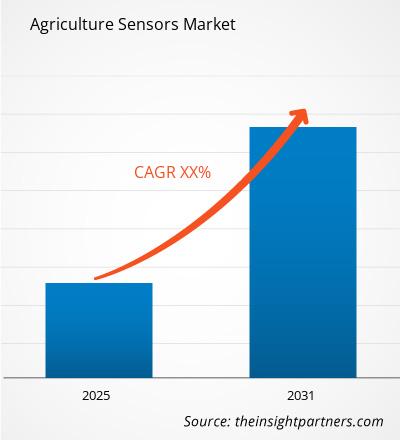
The Agriculture Sensors Market is a fast-growing part of the agritech industry. Valued at US$ 2.66 billion in 2025, it is expected to reach US$ 6.61 billion by 2034, recording a CAGR of 10.64% during 2026-2034. This growth shows how farmers are turning to real-time data to improve yields, conserve resources, and run more efficient operations.
The Agriculture Sensors Market Size is expanding as growers recognize the value of measuring what was once guesswork. Sensors now track soil moisture, nutrient levels, temperature, humidity, and crop health, giving farmers timely insights that support better decisions. As connected devices become cheaper and easier to deploy, adoption is spreading from large commercial farms to mid-sized and smallholder operations.
What Are Agriculture Sensors?
Agriculture sensors are devices that collect data from soil, crops, weather, water, and livestock environments. They are typically paired with wireless connectivity, GPS, and analytics platforms that turn raw readings into practical recommendations. Common types include soil moisture sensors, pH and nutrient sensors, weather stations, optical and imaging sensors, and temperature and humidity sensors.
Together, they form the backbone of precision agriculture and IoT in agriculture, helping farmers apply water, fertilizer, and crop protection exactly where and when they are needed.
Download Sample PDF: https://www.theinsightpartners.com/sample/TIPRE00026893
Leading Companies in the Agriculture Sensors Market
Technology providers, equipment makers, and specialist agritech firms are competing through innovation, partnerships, and integrated data platforms. The key players include:
- Texas Instruments Incorporated: Supplies sensing and semiconductor technologies used in connected agricultural devices.
- Auroras s.r.l.: Provides smart sensing and monitoring solutions for precision farming.
- Robert Bosch GmbH: Offers advanced sensor technologies and IoT solutions for agriculture.
- Ag Leader Technology: Develops precision farming tools, including yield monitoring, guidance, and data management systems.
- Avidor High Tech Ltd.: Delivers sensor-based solutions for field and crop monitoring.
- Pycno Agriculture: Known for solar-powered, multi-parameter sensors that track plant and soil conditions.
- Trimble Inc.: Provides GPS guidance, automation, and precision agriculture hardware and software.
- CropX Inc.: Specializes in soil sensing and analytics for irrigation and crop management.
- The Yield Technology Solutions Pty Ltd: Offers sensing and forecasting tools that help growers manage climate and production risks.
- METER Group, Inc. USA: A leading provider of research-grade soil, plant, and environmental sensors.
- Libelium Comunicaciones Distribuidas S.L.: Develops wireless sensor platforms for IoT and smart agriculture.
- Deere & Company: A pioneer in connected farming equipment, machine learning, and precision technology.
Key Factors Driving Market Growth
Rising Adoption of Precision Agriculture
Farmers increasingly rely on data to guide planting, irrigation, and fertilization. Sensors supply the accurate, real-time information that makes these decisions possible, reducing waste and improving yields.
Growing Demand for Food
A rising global population means farmers must produce more from limited land and water. Sensors help optimize inputs and detect problems early, supporting higher productivity per acre.
Water Scarcity and Resource Efficiency
Water shortages and rising input costs are pushing growers toward smarter resource use. Soil moisture sensors enable precise irrigation, cutting water consumption while protecting crop quality.
Sustainability Goals
Targeted application of fertilizers and pesticides reduces runoff and environmental impact. Sensors help farms meet sustainability targets while lowering costs.
Advances in IoT and Connectivity
Low-power wireless networks, cloud analytics, and affordable hardware are making sensor systems easier to install and scale across farms of every size.
Key Applications of Agriculture Sensors
- Soil monitoring: Tracks moisture, temperature, salinity, and nutrients to guide irrigation and fertilization.
- Crop health monitoring: Detects stress, disease, and pest pressure early.
- Weather monitoring: Supports planting, spraying, and harvest timing.
- Livestock and greenhouse management: Maintains ideal environmental conditions for animals and plants.
- Yield mapping: Measures output across fields to improve future planning.
Challenges Facing the Market
Despite strong potential, adoption faces hurdles. Upfront costs can deter small farms, and limited rural connectivity restricts real-time data transfer. Farmers may also lack technical skills to interpret data, while calibration, maintenance, and durability in harsh field conditions remain concerns. Data privacy and compatibility between different brands also slow integration. Companies are responding with simpler dashboards, subscription-based models, rugged designs, and open data standards.
Purchase a Copy of this report: https://www.theinsightpartners.com/buy/TIPRE00026893
Future Outlook
The future of the agriculture sensors market looks promising. Farming is moving toward connected, data-driven operations in which sensors feed AI models that automate irrigation, spraying, and crop management. Expect progress in low-cost wireless sensors, solar-powered devices, satellite and drone integration, and predictive analytics that anticipate problems before they appear.
As prices fall and connectivity improves, sensor technology will reach more growers worldwide. Partnerships among equipment makers, software firms, and agritech startups, along with government support for digital and sustainable agriculture, will further accelerate adoption.
Also Available in: Korean | German | Japanese | French | Chinese | Italian | Spanish
Related Reports:
Robotics and Automation Actuators Market Size, Share, and Analysis by 2034
Robot Operating System Market Size, Share & Demand by 2034
About Us
The Insight Partners is a one-stop provider of actionable industry research and intelligence. We help our clients get solutions to their research requirements through our syndicated and consulting research services. We specialize in industries such as Semiconductor and Electronics, Aerospace and Defense, Automotive and Transportation, Healthcare IT, Manufacturing and Construction, Medical Devices, Technology, Media and Telecommunications, Food and Beverages, Consumer Goods, and Chemicals and Materials.
Contact Us
Contact Person: Ankit Mathur
Phone: +1-646-491-9876
E-mail : sales@theinsightpartners.com
Latest Post