Why This Matters Now
Healthcare systems are under pressure to deliver faster, broader, and more affordable care while managing rising chronic disease burdens. Telemedicine is becoming a strategic infrastructure investment as hospitals, payers, and governments move beyond traditional care models toward connected healthcare delivery.
The shift changes how providers reach patients and how companies compete. Telemedicine platforms are no longer limited to virtual appointments. They are becoming integrated ecosystems combining remote monitoring, diagnostics, electronic health records, and AI-supported decision-making.
Market Overview
The Telemedicine Technologies and Services Market covers technologies and services that enable healthcare delivery through digital communication platforms. These include virtual consultations, remote patient monitoring, mobile health applications, and healthcare information exchange systems.
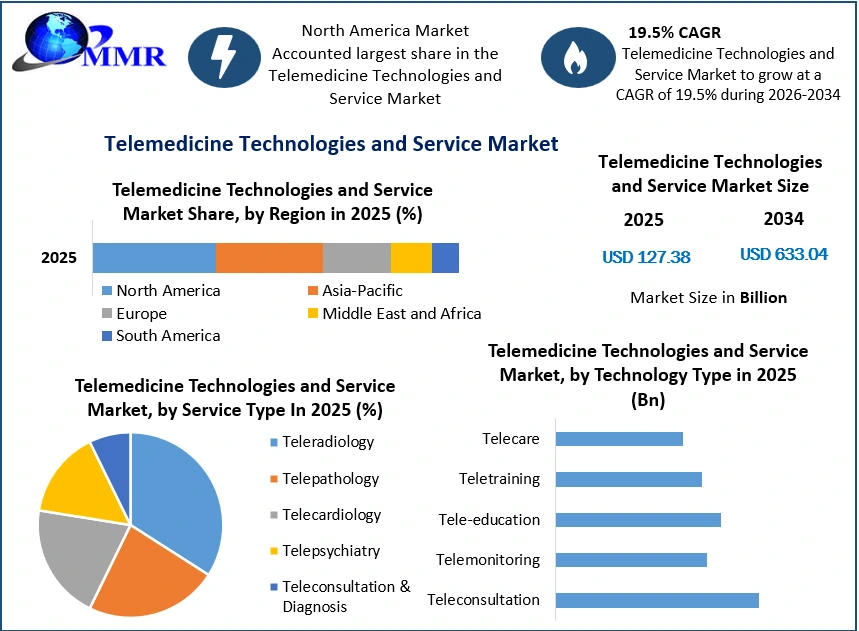
The market reached USD 101.22 billion in 2023 and is forecast to grow to USD 294.55 billion by 2030. The expansion is supported by rising healthcare expenditure, increasing adoption of digital healthcare solutions, and the need to improve access to medical expertise.
Healthcare providers are adopting telemedicine to manage growing patient volumes, especially for chronic conditions requiring continuous monitoring. The business impact is significant: virtual care models can improve healthcare reach while creating new operational efficiencies for hospitals and care networks.
Key Trends Driving Growth
Digital transformation is reshaping healthcare delivery. Hospitals are investing in telemedicine infrastructure to support hybrid care models that combine in-person treatment with virtual follow-ups. This approach improves continuity of care and supports patient engagement.
Chronic disease management is a major growth driver. Conditions requiring regular monitoring, such as cardiovascular diseases, diabetes, and respiratory disorders, are increasing demand for remote patient monitoring solutions. Providers benefit from earlier intervention opportunities and better visibility into patient health trends.
AI integration is accelerating the next phase of telemedicine. Artificial intelligence can support diagnostics, patient triage, data analysis, and clinical decision support. For healthcare companies, AI-enabled platforms create differentiation by improving workflow efficiency and expanding digital care capabilities.
Precision medicine is also influencing telemedicine adoption. Remote platforms allow continuous collection of patient data, enabling more personalized treatment strategies. Pharma and biotech companies can leverage digital monitoring tools to support clinical research, patient engagement, and decentralized trials.
Regulatory and reimbursement developments remain critical. Wider acceptance of virtual consultations and remote care reimbursement policies can determine adoption speed across healthcare systems. Companies that align technology with regulatory requirements gain stronger market positioning.
Request a Free Sample Copy or View Report Summary
Segment Insights
- Dominant Segment: Telemedicine Services — The services segment represents a major portion of the market as healthcare providers and patients increasingly adopt virtual consultations, remote healthcare support, and digital care delivery models.
- Fastest-Growing Segment: Remote Patient Monitoring Solutions — Growth is supported by rising demand for continuous health tracking, chronic disease management, and connected healthcare devices that extend care beyond hospitals.
Regional Growth Story
The United States remains a leading telemedicine market due to advanced healthcare infrastructure, strong technology adoption, and increasing demand for convenient care models. Healthcare providers are integrating virtual care into broader value-based care strategies focused on outcomes and efficiency.
Germany and the UK are expanding digital healthcare adoption through investments in healthcare modernization. Regulatory frameworks and reimbursement systems continue to influence how quickly telemedicine becomes part of routine medical services.
China is advancing rapidly through digital healthcare expansion and technology investment. Large patient populations and increasing healthcare demand create opportunities for telemedicine platforms that improve access and healthcare delivery efficiency.
Japan and South Korea are focusing on technology-driven healthcare systems, supported by strong digital infrastructure and innovation capabilities. Aging populations and demand for efficient healthcare management are supporting remote care adoption.
India represents a significant opportunity due to healthcare access challenges, growing digital connectivity, and expanding adoption of online medical services. Telemedicine can help bridge specialist shortages and improve healthcare availability across diverse regions.
Competitive Landscape
The competitive landscape includes technology companies, healthcare providers, and digital health firms developing telemedicine platforms, remote monitoring systems, and connected healthcare solutions. Companies are competing on platform scalability, integration capabilities, cybersecurity, and clinical value.
The market direction is shifting from standalone virtual consultation tools toward integrated healthcare ecosystems. Companies investing in AI, data analytics, interoperability, and patient engagement technologies are strengthening their competitive advantage.
Strategic partnerships between healthcare organizations and technology providers signal a broader industry shift. These collaborations aim to improve patient access, enhance care coordination, and create scalable healthcare delivery models.
Recent Developments
- Expansion of virtual consultation platforms is improving healthcare access and enabling flexible patient engagement models.
- Growth in remote monitoring technologies is supporting continuous management of chronic diseases and reducing dependence on hospital visits.
- AI-enabled healthcare solutions are advancing telemedicine capabilities through improved diagnostics and clinical support.
- Increased investment in digital healthcare infrastructure is creating opportunities for technology companies and healthcare providers.
Strategic Implications
Healthcare executives must view telemedicine as a long-term operating model rather than a temporary digital channel. Hospitals that integrate virtual care with diagnostics, monitoring, and patient data systems can improve efficiency and strengthen patient relationships.
For pharma and biotech companies, telemedicine creates new pathways for patient engagement, decentralized research, and treatment monitoring. Investors are increasingly focused on companies that combine healthcare expertise with scalable technology platforms.
Payers and regulators will influence the next stage of market development. Sustainable reimbursement structures, data security standards, and interoperability policies will determine which solutions achieve widespread adoption.
Future Outlook
The Telemedicine Technologies and Services Market is moving toward connected, intelligent, and personalized healthcare delivery. The next winners will be companies that combine digital innovation with clinical outcomes, regulatory readiness, and scalable healthcare infrastructure.
Analyst Perspective
“Telemedicine adoption is accelerating as healthcare systems prioritize accessibility, efficiency, and patient-centered care. The integration of remote monitoring, artificial intelligence, and digital platforms is creating new opportunities for healthcare providers and technology companies to deliver more connected medical services.”
— Komal Patil, Research Analyst
About Maximize Market Research
Maximize Market Research Pvt. Ltd. (MMR) is a global market research and consulting company that provides reliable, data-focused, and practical business insights. The firm serves a wide range of industries, including healthcare, pharmaceuticals, technology, automotive, electronics, chemicals, personal care, and consumer goods. Through market forecasts, competitive analysis, strategic consulting, and industry impact assessments, MMR helps organizations understand changing market conditions, identify growth opportunities, and make informed business decisions for long-term success.
2nd Floor, Navale IT Park Phase 3
Pune Banglore Highway, Narhe
Pune, Maharashtra 411041, India
+91 9607365656
sales@maximizemarketresearch.com