Hydraulic Actuators Market requires solutions suited to different pressure and load conditions. Equipment manufacturers evaluate force output, operating speed, and installation space. Compatibility with hydraulic circuits is another important consideration. Proper product selection supports safe and reliable operation. Technical specifications influence procurement decisions.
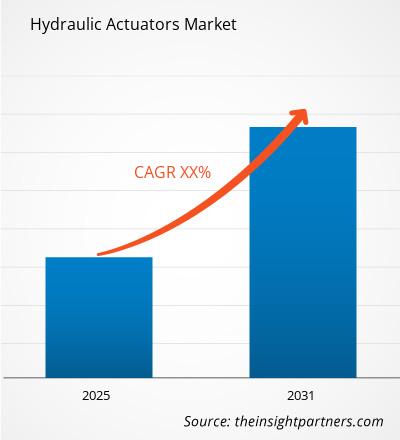
The global Hydraulic Actuators Market size is expected to reach US$ 21.22 billion by 2034 from US$ 14.40 billion in 2025. The market is anticipated to register a CAGR of 4.4% during the forecast period 2026–2034. Increasing demand for heavy-duty machinery, industrial automation, construction equipment, and infrastructure development is supporting the adoption of hydraulic actuators across various industries.
Hydraulic actuators are mechanical devices that convert hydraulic energy into controlled movement and force. They are widely used in equipment that requires lifting, pushing, pulling, rotating, or positioning operations. Their ability to generate substantial force makes them suitable for applications involving heavy loads and demanding operating conditions. These devices are important components in industrial machinery, mobile equipment, and specialized systems.
Growing Demand Across Industrial Applications
Industrial manufacturing is an important application area for hydraulic actuators. Production facilities use hydraulic-powered equipment for material handling, machine operation, pressing, and positioning activities. Actuators help machinery perform controlled movements and support consistent production processes. As manufacturers upgrade equipment and invest in automation, demand for dependable actuation systems remains relevant.
Get Access Report Sample: https://www.theinsightpartners.com/sample/TIPRE00007871
The construction industry also contributes to market demand. Excavators, loaders, cranes, and other construction machinery use hydraulic actuators to operate essential components. These devices support lifting, digging, and positioning functions that require considerable force. Infrastructure development and investment in construction equipment can therefore influence the adoption of hydraulic actuator technologies.
Agricultural machinery is another area where hydraulic actuators are widely used. Tractors and other farm equipment depend on hydraulic systems for lifting implements and operating attachments. The increasing use of mechanized equipment supports the need for reliable hydraulic components. Actuator performance can influence equipment productivity and ease of operation.
Importance of Performance and Reliability
Hydraulic actuators are selected according to application requirements such as force output, operating pressure, stroke length, speed, and movement type. Their construction must withstand repeated mechanical loads and operating conditions. Seals, cylinders, materials, and hydraulic fluid quality all influence performance and service life.
In industries such as mining and oil and gas, equipment often operates in demanding environments. Hydraulic actuators support machinery that requires controlled movement and high force. Product durability and dependable operation are important because equipment downtime can affect productivity and maintenance costs.
Hydraulic systems are also used in marine equipment and power generation facilities. These applications require components suited to specific operating conditions, including pressure, moisture, and exposure to challenging environments. Manufacturers focus on product design and material selection to address these requirements.
Technological Developments and Industry Requirements
Developments in actuator engineering are focused on improving durability, sealing performance, control, and operating efficiency. Manufacturers are working to reduce leakage, wear, and maintenance requirements while supporting consistent movement under different load conditions. Integration with monitoring and control systems is also relevant as industrial equipment becomes more connected.
Equipment manufacturers and industrial buyers consider compatibility with existing hydraulic circuits when selecting actuators. Installation requirements, maintenance access, technical support, and product availability can also influence purchasing decisions. The ability to provide solutions for specific operating conditions remains important for suppliers.
Despite their advantages, hydraulic actuators face challenges associated with fluid leakage, contamination, seal wear, and regular maintenance. High-pressure systems require appropriate inspection and servicing to maintain performance. Manufacturers and users therefore place importance on component quality, suitable installation, and preventive maintenance practices.
Competitive Landscape and Key Players
The hydraulic actuators market includes companies that provide products and engineering solutions for industrial machinery, mobile equipment, and infrastructure applications. Competition is influenced by product reliability, technical capabilities, distribution networks, and customer support. Manufacturers seek to address the requirements of equipment producers and end users through application-specific solutions.
Key players operating in the hydraulic actuators market include:
- Eaton Corporation
- Emerson Electric Co.
- Flowserve Corporation
- Parker Hannifin Corporation
- Pentair Plc.
- Rotork Plc.
- SMC Corporation
- Wipro Infrastructure Engineering
These companies participate in a market where customers evaluate actuator performance, durability, compatibility, and lifecycle requirements. Product development and engineering support remain important factors in serving different industrial applications.
Get Full Copy of This Report- https://www.theinsightpartners.com/buy/TIPRE00007871
Future Outlook
The hydraulic actuators market is expected to maintain steady growth as industrial activity, construction projects, and infrastructure investments support demand for machinery and equipment. The market is projected to increase from US$ 14.40 billion in 2025 to US$ 21.22 billion by 2034, registering a CAGR of 4.4% during 2026–2034.
The need for equipment capable of handling heavy loads and performing controlled movements is expected to sustain the use of hydraulic actuation systems. Improvements in actuator design, materials, and monitoring capabilities may also influence future product development. Industrial buyers are likely to continue prioritizing reliability, compatibility, and maintenance performance.
As manufacturing facilities and infrastructure projects evolve, hydraulic actuators will remain relevant in applications requiring dependable mechanical force and movement. Their role across industrial and mobile equipment is expected to support continued market development.
About The Insight Partners
The Insight Partners is a leading market research and consulting firm delivering actionable insights through in-depth industry analysis and strategic intelligence. The firm supports clients across various industries in making informed business decisions by providing comprehensive market forecasts, competitive assessments, and growth opportunities.
Contact Us:
If you have any queries about this report or if you would like further information, please contact us:
Contact Person: Ankit Mathur
E-mail: sales@theinsightpartners.com
Phone: +1-646-491-9876
Also Available in :