Key Highlights
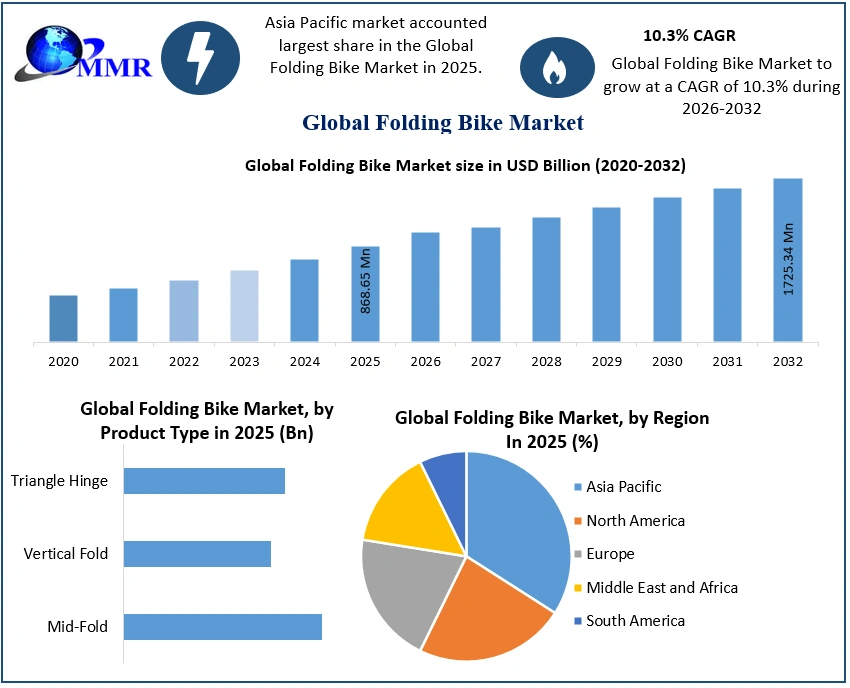
- The global Folding Bike Market was valued at USD 783.2 million in 2023 and is projected to reach USD 1,374.8 million by 2030, growing at a CAGR of 8.4%. This expansion signals increasing investment in compact mobility solutions and sustainable transportation infrastructure.
- Urban congestion and limited parking availability are accelerating adoption of portable transportation alternatives.
- Electric folding bicycles are creating new growth opportunities within the broader micro-mobility ecosystem.
- Government sustainability initiatives and cycling infrastructure investments continue strengthening market demand.
- Integration with public transportation networks is increasing the strategic importance of folding bicycles in multimodal mobility systems.
Why This Matters Now
Transportation systems are being redesigned around efficiency, sustainability, and flexibility. Traditional commuting models are facing pressure from congestion, rising fuel costs, environmental regulations, and changing consumer behavior.
Folding bicycles have emerged as a practical solution to multiple urban transportation challenges simultaneously. They reduce dependence on private vehicles, improve first-mile and last-mile connectivity, and support broader city-level sustainability objectives. What was once considered a niche cycling category is becoming a strategic mobility asset.
Market Overview
The Folding Bike Market is benefiting from a broader transformation in urban transportation. Cities worldwide are seeking alternatives that reduce traffic congestion, lower emissions, and improve mobility access without requiring large-scale infrastructure expansion.
The market reached USD 783.2 million in 2023 and is expected to grow to USD 1,374.8 million by 2030. This growth represents more than rising bicycle sales. It signals a shift in how commuters, employers, mobility operators, and governments approach urban transportation challenges.
The appeal of folding bikes extends beyond convenience. Their compact design enables seamless integration with trains, buses, metro systems, and shared mobility platforms. As transportation becomes increasingly interconnected, portability is emerging as a competitive advantage.
The market is also benefiting from changing workplace dynamics. Hybrid work models have altered commuting patterns, encouraging consumers to seek flexible transportation solutions that accommodate variable travel schedules.
Key Trends Driving Growth
The strongest growth driver is urban mobility transformation. Cities are investing heavily in cycling infrastructure, dedicated bike lanes, and sustainable transportation programs. These investments create favorable conditions for folding bike adoption while reducing barriers to daily cycling.
Electrification is creating a second wave of market expansion. Electric folding bicycles combine portability with enhanced travel range and rider convenience. This development broadens the addressable customer base by attracting commuters who previously viewed cycling as impractical for longer distances.
The rise of multimodal transportation is another significant catalyst. Modern commuters increasingly combine multiple transportation methods during a single journey. Folding bikes fit naturally into this ecosystem because they can transition easily between personal transportation and public transit networks.
Transportation digitization is also influencing the sector. Mobility platforms, route-planning applications, and integrated transportation services are encouraging consumers to adopt flexible commuting strategies. Folding bikes increasingly function as part of larger mobility ecosystems rather than standalone products.
Sustainability objectives continue supporting demand. Governments, corporations, and consumers are prioritizing carbon reduction initiatives. Folding bicycles offer a low-emission transportation option that aligns with broader environmental goals while reducing transportation costs.
The market is also benefiting from growing awareness of health and wellness. Active transportation solutions are increasingly viewed as both mobility tools and lifestyle investments, creating demand across multiple demographic groups.
𝐃𝐨𝐰𝐧𝐥𝐨𝐚𝐝 𝐏𝐃𝐅 𝐁𝐫𝐨𝐜𝐡𝐮𝐫𝐞 @ https://www.maximizemarketresearch.com/request-sample/14732/
Segment Insights
- Dominant Segment: Conventional folding bicycles continue to represent the largest market segment due to affordability, established consumer awareness, and broad accessibility across urban markets.
- Fastest-Growing Segment: Electric folding bikes are emerging as the fastest-growing category as battery technology improvements and consumer demand for convenient urban mobility accelerate adoption.
- Urban commuting applications remain the primary demand driver, reflecting increasing reliance on compact transportation solutions in densely populated cities.
- Premium lightweight folding bicycles are gaining traction among professionals seeking performance, portability, and seamless integration with public transportation systems.
Regional Growth Story
Asia-Pacific remains one of the most influential regions in the folding bike industry. Rapid urbanization, population density, and transportation congestion are creating strong demand for compact mobility solutions. China, Japan, and South Korea continue investing in transportation modernization initiatives that support cycling adoption.
Europe maintains a strong market position due to established cycling cultures, sustainability regulations, and extensive bicycle infrastructure. Countries such as Germany continue promoting alternative transportation solutions as part of broader emissions reduction strategies.
The United States is experiencing growing adoption as urban centers invest in bike-friendly infrastructure and consumers seek alternatives to congested transportation corridors. Corporate sustainability programs and commuter incentives are also contributing to demand growth.
India represents an emerging opportunity. Rapid urban growth, increasing traffic congestion, and government interest in sustainable transportation are creating favorable conditions for market expansion. As infrastructure improves, folding bicycles could play an increasingly important role in urban mobility strategies.
Across major markets, policy support is becoming a decisive growth factor. Cities that invest in cycling infrastructure and multimodal transportation systems are creating environments where folding bicycles can achieve broader adoption.
Competitive Landscape
Competition is evolving beyond product design toward ecosystem participation.
Leading manufacturers including Brompton Bicycle, Dahon, Giant Manufacturing, Montague Corporation, Tern Bicycles, and Bike Friday are increasingly focusing on lightweight materials, portability improvements, rider comfort, and electric mobility integration.
This shift signals a broader industry transition. Competitive advantage is no longer determined solely by frame engineering or manufacturing efficiency. Companies must now address connectivity, mobility integration, sustainability, and user experience.
Electric folding bike development has become a particularly important battleground. Manufacturers that successfully combine battery efficiency, lightweight construction, and compact folding mechanisms are likely to strengthen market positioning.
The competitive landscape also reflects changing consumer expectations. Customers increasingly seek transportation solutions rather than standalone products. This trend creates opportunities for partnerships between bicycle manufacturers, mobility providers, and transportation platforms.
Future leaders are likely to be companies capable of integrating products into broader urban mobility ecosystems while maintaining strong brand differentiation.
Recent Developments
- Electric folding bicycle development continues accelerating as manufacturers respond to rising demand for sustainable mobility solutions.
- Urban transportation planners are expanding cycling infrastructure investments across major metropolitan regions.
- Integration between cycling networks and public transportation systems is improving multimodal commuting options.
- Lightweight materials and advanced frame technologies are enhancing portability and rider experience.
- Sustainability-focused transportation policies continue supporting bicycle adoption across developed and emerging markets.
Strategic Implications
For manufacturers, the priority is balancing portability, durability, affordability, and electrification capabilities.
For suppliers, opportunities exist in lightweight materials, battery systems, drivetrain technologies, folding mechanisms, and mobility software integration.
For investors, value creation is increasingly tied to companies participating in broader micro-mobility and transportation digitization trends.
For transportation planners, folding bikes provide a cost-effective solution for improving first-mile and last-mile connectivity while reducing infrastructure strain.
For mobility providers, folding bicycles create opportunities to expand service offerings and strengthen integration across transportation networks.
Future Outlook
The next stage of market competition will not be defined by bicycle sales alone. It will be determined by how effectively manufacturers integrate folding bikes into connected urban mobility ecosystems shaped by electrification, sustainability mandates, and multimodal transportation strategies.
The companies that position folding bicycles as essential infrastructure within future transportation networks will capture disproportionate value, while those treating the category as a conventional cycling segment risk being left behind by the rapid evolution of urban mobility.
Analyst Perspective
"The Folding Bike Market is transitioning from a specialty transportation category into a strategic component of modern urban mobility systems. Organizations that align product innovation with electrification, sustainability objectives, and multimodal transportation trends will be best positioned to capitalize on long-term market opportunities." — Tejaswini Kakade, Research Analyst
About Maximize Market Research
Maximize Market Research Pvt. Ltd. (MMR) is a global market research and consulting company that provides reliable, data-focused, and practical business insights. The firm serves a wide range of industries, including healthcare, pharmaceuticals, technology, automotive, electronics, chemicals, personal care, and consumer goods. Through market forecasts, competitive analysis, strategic consulting, and industry impact assessments, MMR helps organizations understand changing market conditions, identify growth opportunities, and make informed business decisions for long-term success.
2nd Floor, Navale IT Park Phase 3
Pune Banglore Highway, Narhe
Pune, Maharashtra 411041, India
+91 9607365656
sales@maximizemarketresearch.com