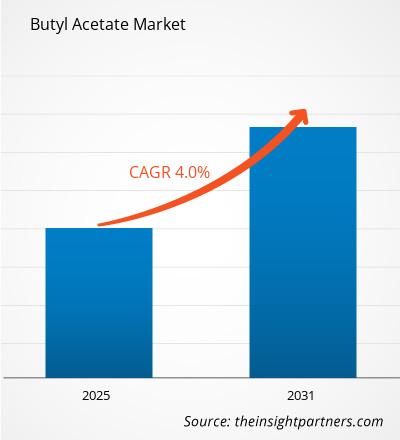
The Butyl Acetate Market is on a steady upward path. It was valued at US$ 1.43 billion in 2025. It is expected to reach US$ 2.03 billion by 2034. That works out to a CAGR of 3.94% between 2026 and 2034. Butyl acetate is a clear solvent with a fruity smell. It dissolves many materials and evaporates quickly, which makes it a trusted ingredient in paints, adhesives, inks, textiles, and many other products.
What Is Driving the Market?
The coatings industry is the biggest source of demand. Butyl acetate works as a solvent in paints, varnishes, and coatings because it dissolves well and dries fast. As the construction and automotive sectors grow, so does the need for coatings, and consumption of the solvent rises with it.
Rules on emissions are also shaping the market. Many buyers are moving toward safer, low-VOC coatings. Makers now need solvents that can meet strict environmental laws, and butyl acetate suppliers are working to keep pace.
Get a Sample Report https://www.theinsightpartners.com/sample/TIPRE00012624
Adhesives and sealants add more lift. These products are used in packaging, vehicles, and buildings, and the need for strong, rigid bonds keeps growing. As makers build better binding agents, they use more butyl acetate as both a solvent and an ingredient.
Textiles are another steady driver. Butyl acetate is used in dyeing and finishing, and textile output is expanding, especially in developing countries. That growth supports demand in a quiet but dependable way.
Which Segment Leads?
The report splits the market by type and by application. By type, it covers laboratory grade, industry grade, and others. Industry grade serves large-scale uses such as coatings and adhesives. Laboratory grade serves research and testing, where purity matters most.
By application, the report looks at automotive industries, food and beverage industries, cosmetic and adhesive industries, and others. Each one uses butyl acetate for a different job, from paint and finishing in vehicles to flavor and fragrance work.
Paints and coatings is expected to be the fastest-growing end use industry during the forecast period. That fits the wider trend toward high-performance coatings that resist wear and tough weather.
Which Region Leads?
The report covers North America, Europe, Asia Pacific, and South and Central America. It also goes down to the country level, covering markets such as the US, Canada, Mexico, the UK, Germany, France, Italy, China, India, Japan, Australia, and Brazil.
Asia Pacific held the largest share of the market. The report links this to growth in the paints and coatings and automotive industries. Busy factories and fast-growing cities give the region a clear edge.
The United States is also a key market. A strong coatings sector, a growing adhesives industry, and textile uses all support demand there.
Which Companies Are Prominent?
The report profiles these market leaders:
- BASF SE
- Celanese Corporation
- Dow
- Eastman Chemical Company
- INEOS
- Solvay
- Solventis
- Merck KGaA
- Thermo Fisher Scientific Inc
- CARL ROTH
This group mixes large chemical makers with well-known laboratory suppliers. Names like BASF SE, Dow, and INEOS bring scale and wide product lines. Merck KGaA, Thermo Fisher Scientific, and CARL ROTH are strong in laboratory-grade supply.
Competition rests on purity, steady supply, and cost. Producers are also working on cleaner processes to meet the needs of eco-minded buyers. The report studies the strategies and innovation work of these players, so readers can see who is investing for the future.
Buy the Full Report https://www.theinsightpartners.com/buy/TIPRE00012624
What Is Changing in the Market?
Production methods are improving. Advanced catalytic systems and the use of renewable raw materials are lifting efficiency and trimming the environmental footprint. These steps also help lower costs while meeting the call for cleaner chemicals.
Sustainability is now a major theme. Bio-based butyl acetate, made from renewable resources, is being studied and developed. Companies see it as a way to match their green goals and open the door to new product variants.
Digital tools are arriving in plants too. Automation, data analytics, and connected sensors let makers watch processes in real time. This cuts waste, raises quality, and strengthens supply chain management.
What Are the Investment Opportunities?
Performance coatings offer a clear opening. New coatings are being built to resist wear and harsh weather while still looking good. These advanced formulas need solvents that perform, which supports butyl acetate demand.
Economic growth is a second path. Rising industrial and urban activity lifts solvent use across many sectors. Producers can build local plants or partner with regional firms to widen their reach.
Innovation is the third area. Working with universities and technology firms can lead to new uses and greener products. The total addressable market for 2026 to 2034 is projected at about US$ 15.69 billion. That figure shows the scale of the chance ahead for makers and investors who plan with care.
Related Reading / Reports
Explore additional research from The Insight Partners covering related chemical markets:
- Epichlorohydrin (ECH) Market — covers a key chemical used in epoxy resins and coatings.
- Oleochemicals Market — covers bio-based chemicals made from natural fats and oils.
- Polyoxyethylene Hydrogenated Castor Oil Market — covers an emulsifier used in cosmetics and pharma products.
- Hydrofluoric Acid Market — covers an industrial acid used across many sectors.
Contact US
For any queries regarding this report, please reach out to us as of now:
Phone: +1-646-491-9876
E-mail: sales@theinsightpartners.com
Also Available in : Korean | German | Japanese | French | Chinese | Italian | Spanish