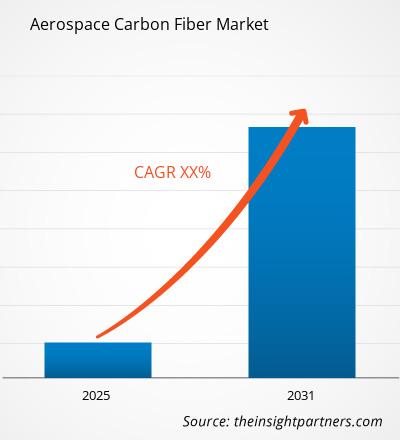
The global aerospace carbon fiber market is experiencing transformative expansion as commercial aviation OEMs, defense contractors, and emerging urban air mobility innovators prioritize lightweighting, fuel efficiency, and structural durability. According to the latest industry research report, the Aerospace Carbon Fiber Market is expected to register a CAGR of 9.16% from 2026 to 2034, with the market size expanding from US$ 5.39 Billion in 2025 to US$ 11.86 Billion by 2034.
Carbon fiber composites have become indispensable across modern aerospace engineering due to their exceptional strength-to-weight ratio, superior fatigue resistance, and corrosion immunity compared to traditional aluminum and titanium alloys. As global air passenger traffic rebounds and airlines accelerate fleet modernization programs to meet stringent net-zero emission mandates, aircraft manufacturers are integrating higher percentages of carbon fiber-reinforced polymers (CFRPs) into fuselages, wing boxes, empennages, and next-generation turbofan engine fan blades.
Key Market Drivers and Industry Dynamics
The surge in global aircraft order backlogs stands as the primary catalyst propelling carbon fiber consumption. Flagship wide-body programs such as the Boeing 787 Dreamliner and Airbus A350, where composites account for over 50% of structural weight continue to anchor baseline demand. Simultaneously, high-rate narrow-body production, regional jet developments such as the COMAC C919, and expanding defense modernization budgets for unmanned aerial vehicles (UAVs) and sixth-generation fighter jets are creating sustained procurement momentum.
Technological advancements in resin matrices and automated manufacturing are further unlocking new aerospace applications. The industry is witnessing a decisive shift toward high-performance thermoplastic composites and out-of-autoclave (OoA) processing. Unlike traditional thermoset prepregs that require lengthy autoclave curing cycles, thermoplastic carbon fiber tapes can be rapidly stamped, thermoformed, and induction-welded enabling aerospace suppliers to meet aggressive monthly build-rate targets for single-aisle aircraft. Additionally, pitch-based ultra-high-modulus carbon fibers are gaining traction in commercial space launch vehicles, satellite bus structures, and hypersonic thermal management systems.
Get a PDF Sample- https://www.theinsightpartners.com/sample/TIPRE00021209
Regional Insights
North America continues to command a leading share of the global aerospace carbon fiber landscape, supported by deeply integrated tier-1 supply chains, robust defense R&D expenditure, and established manufacturing hubs across the United States. Europe follows closely, anchored by major commercial aviation assembly lines and pioneering sustainability initiatives aimed at circular composite manufacturing. Meanwhile, Asia Pacific is projected to witness the fastest regional growth through 2034, propelled by rising domestic aircraft component manufacturing in India, expanding indigenous aviation programs in China, and strong fiber production capabilities in Japan and South Korea.
Competitive Landscape and Key Players
The global aerospace carbon fiber ecosystem is characterized by strict material qualification protocols, multi-year supply agreements, and continuous R&D investments in recyclable resins and automated fiber placement (AFP) compatibility. Leading market participants are actively expanding precursor capacities and forging strategic partnerships with airframe and aero-engine manufacturers to secure long-term supply pipelines.
Prominent companies profiled in the Aerospace Carbon Fiber market report include:
-
BASF SE
-
Bally Ribbon Mills
-
BGF Industries, Inc.
-
Hexcel Corporation
-
Mitsubishi Chemical Carbon Fiber and Composites, Inc.
-
Renegade Materials Corporation
-
SGL Carbon
-
Solvay
-
TEIJIN LIMITED.
-
TORAY INDUSTRIES, INC.
Get Full Copy of This Report- https://www.theinsightpartners.com/buy/TIPRE00021209
Future Outlook
Looking ahead to 2034, the aerospace carbon fiber market is poised to enter a new era defined by sustainability, digital manufacturing, and next-generation propulsion architectures. While high precursor costs and energy-intensive carbonization processes remain structural challenges, breakthrough innovations in low-cost bio-based precursors, vitrimer recyclable resins, and closed-loop reclaimed carbon fiber procurement are actively reshaping lifecycle economics. Furthermore, the commercialization of electric vertical takeoff and landing (eVTOL) aircraft, hydrogen-powered regional airliners, and reusable orbital launch vehicles will create entirely new structural demand verticals where lightweighting is mission-critical. Companies that pair aerospace-grade material qualification with scalable, low-carbon production footprints will capture the greatest value over the next decade.
Related Reports-
Hydrogen Aircraft Market Size, Trends & Growth by 2034
Aviation Maintenance Tools Market Share, Trends & Growth by 2034
About The Insight Partners
The Insight Partners is a leading market research and consulting firm delivering actionable insights through in-depth industry analysis and strategic intelligence. The firm supports clients across various industries in making informed decisions by providing comprehensive market forecasts, competitive assessments, and growth opportunities.
Contact Us:
If you have any queries about this report or if you would like further information, please contact us:
Contact Person: Ankit Mathur
E-mail: sales@theinsightpartners.com
Phone: +1-646-491-9876
Also Available in : Korean| German| Japanese| French| Chinese| Italian| Spanish